The meaning of growth mindset is the belief that abilities, talent, and can improve through effort, learning, and persistence. Originally established by psychologist Dr. Carol Dweck, this mindset leads to higher achievement, greater resilience, and lifelong personal growth.
What is the growth mindset?
A growth mindset is the belief that your intelligence, talents, and abilities are not fixed. They can be developed through effort, strategy, and learning from feedback.

In contrast, a fixed mindset believes you’re either “good at something” or not. It argues that no amount of effort will change that.
This idea, founded by Carol Dweck, transformed the way we think about learning and achievement.
“In a growth mindset, challenges are opportunities, not threats. Your brain is a muscle. The more you use it, the stronger it gets.” – Dr. Carol Dweck
Key Characteristics of a Growth Mindset
- Belief in Development
You can improve with practice and learning. - Embracing Challenges
Struggle isn’t failure, it’s how you grow. - Persistence in Setbacks
Mistakes are feedback, not proof you “can’t.” - Effort as a Path to Mastery
Success comes from hard work, not just talent. - Learning from Feedback
Criticism helps you grow, it’s not personal. - Inspired by Others
You admire success and use it as fuel.

Growth Mindset vs. Fixed Mindset: Key Differences
Let’s break this down:
| Growth Mindset | Fixed Mindset |
|---|---|
| Believes abilities can improve | Thinks abilities are fixed |
| Embraces challenges | Avoids challenges |
| Views effort as a path to mastery | Sees effort as pointless |
| Learns from criticism | Ignores feedback |
| Inspired by others’ success | Feels threatened by others’ success |

Imagine being stuck in traffic and deciding to take a new route instead of waiting. A growth mindset is like taking that new route—it might not work perfectly, but it teaches you something new.
The Origin of the Growth Mindset
The growth mindset concept was born from groundbreaking research by Dr. Carol Dweck at Stanford University. In one famous study, children were given puzzles that got harder over time.
- Some thrived—excited by the challenge.
- Others gave up quickly when it got tough.
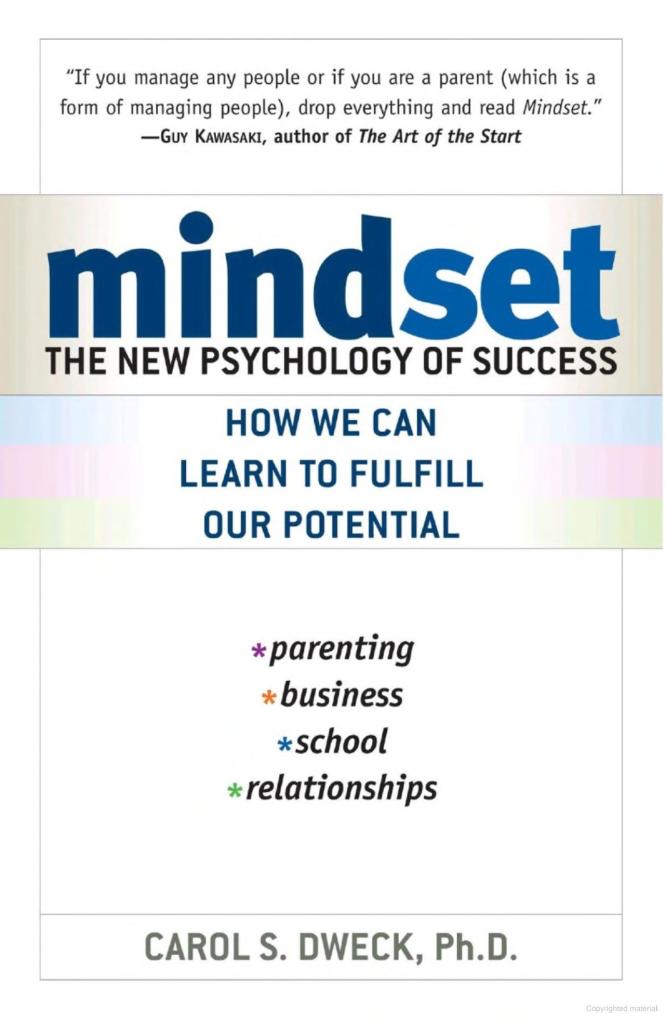
Her findings are detailed in her influential book, Mindset: The New Psychology of Success.
The kids who lit up with excitement were eager to tackle harder problems. Others grew frustrated and gave up as soon as they struggled.
Why the difference?
Mindset.
Those with a growth mindset kept going. They believed they could figure it out. Those with a fixed mindset thought struggle meant they weren’t “smart enough.”
This discovery revolutionized education, psychology, parenting, and business.

Why is a Growth Mindset Important?
People with a growth mindset tend to:
👉 Perform better academically and professionally
👉 Bounce back faster from setbacks
👉 Build stronger relationships
👉 Have greater motivation and resilience
A 2015 study in Psychological Science showed students who were taught growth mindset principles significantly improved their grades.

One personal example on the importance of becoming growth oriented: I used to struggle with public speaking. My fixed mindset told me I wasn’t a “natural,” so why try? But after adopting a growth mindset, I started practicing, watching TED Talks, and seeking feedback. Over time, my skills improved, and what once terrified me became a strength.
A 2019 study published in Nature also found that students with a growth mindset were more likely to persist. They were significantly better at dealing with difficult tasks. This is proof that this mindset applies to both learning and life.
How to Develop a Growth Mindset
Here are 3 practical steps to develop a growth mindset:
- Challenge Negative Thoughts
Replace “I can’t do this” with “I can’t do this yet.” - Celebrate Effort Over Outcome
Focus on the process, not perfection. - Learn from Mistakes
Every mistake contains at lesson lesson, if you choose to look for it.
Daily Habits to Reinforce a Growth Mindset
- Practice Gratitude: Think about what you’re thankful for and what you’ve learned each day.
- Set Mini-Goals: Break big challenges into small, manageable steps.
- Seek Feedback: Constructive criticism is a growth mindset goldmine.

Mindfulness and Growth Mindset
Practicing mindfulness boosts neuroplasticity, which is your brain’s ability to form new connections.
That means you can literally rewire your brain to adopt a growth mindset through habits like:
- Meditation
- Journaling
- Deep reflection
Growth mindset isn’t just mental, it’s biological.
Examples of People with a Growth Mindset

Here are a few well known people with a Growth Mindset:
- Serena Williams: Used every loss to improve and stayed at the top for decades.
- Elon Musk: Tackles massive challenges with relentless curiosity and learning.
- Oprah Winfrey: Overcame rejection and trauma to build a media empire.
- Michael Jordan: Was cut from his high school team—then became the GOAT.
- Steven Spielberg: Rejected from film school multiple times.
Common Misconceptions About Growth Mindset
- “It means I can be anything if I try hard enough.”
➤ Not quite. Effort matters, but so does strategy and mentorship. - “It’s all positive thinking.”
➤ Wrong. Growth mindset is backed by science, not just motivation. - “Some people are born with it.”
➤ False. Mindset can shift, gradually, like a dimmer switch (Mary C. Murphy).
🧠 Bonus: People Also Ask – FAQ
What is the best definition of growth mindset?
It’s the belief that you can grow your abilities through effort, feedback, and learning—not natural talent alone.
How do you teach a growth mindset?
By modeling it: praise effort, reframe failure, and emphasize learning over perfection.
Can adults develop a growth mindset?
Yes. Neuroplasticity means we can rewire our thinking at any age.
The Meaning of Growth Mindset
A growth mindset isn’t just a theory, it’s a powerful way to change how you live, learn, and lead.
It means seeing yourself as a work in progress.
Your next level isn’t fixed, it’s earned.
So here’s your challenge:
What’s one area in your life where you want to grow?
Leave a comment or share your story, I’d love to hear how you’re building your mindset.
📚 References:
TED Talk: The Power of Believing You Can Improve
Carol Dweck, Mindset: The New Psychology of Success
Dweck et al., 2007 — Child Development
Yeager & Walton, 2019 — Nature
Paunesku et al., 2015 — Psychological Science

 Growth Mindset Guy
Leave a reply to What is Carol Dweck’s mindset summary? – Growth Mindset Guy Cancel reply