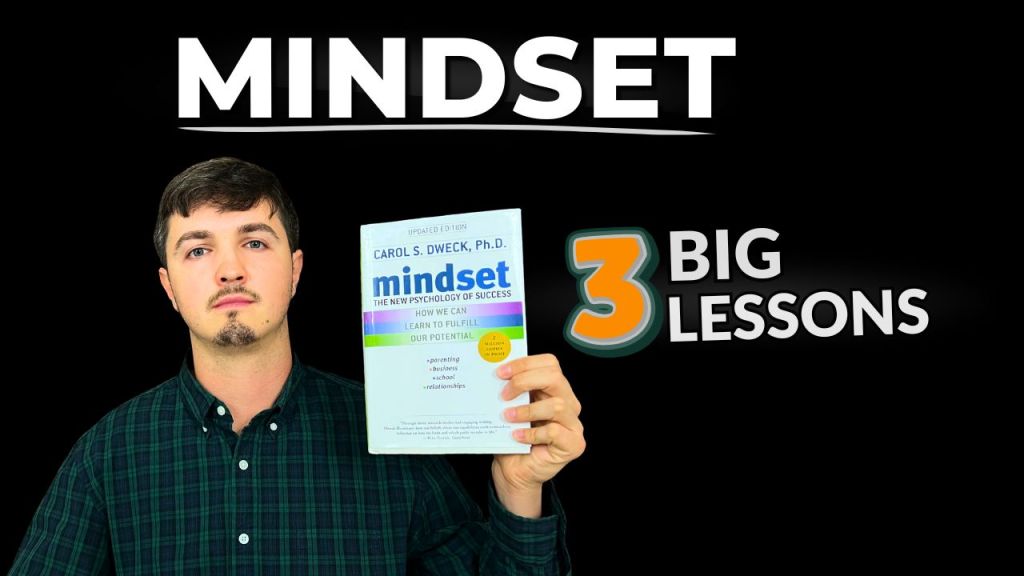
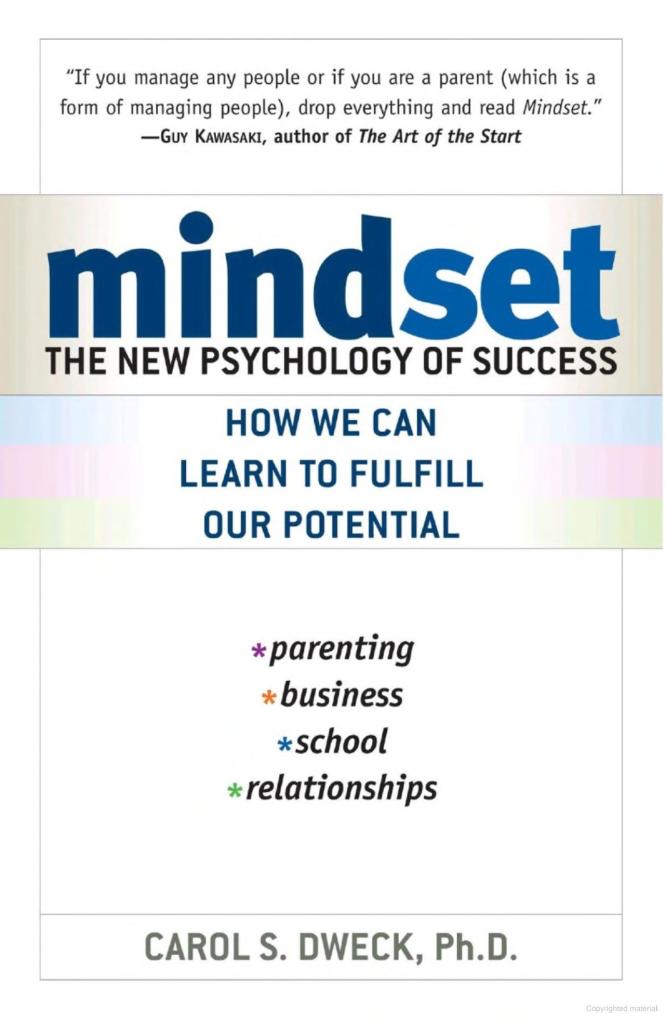
Carol Dweck’s Mindset: The New Psychology of Success explains that your beliefs can greatly influence how successful you become.
Dweck reveals a simple but life-changing idea: your mindset shapes your ability to grow, learn, and achieve your goals.
People tend to adopt one of two core beliefs about intelligence and talent: a fixed mindset or a growth mindset.
A fixed mindset believes that intelligence, talent, and abilities are set in stone. People with this mindset often avoid challenges, fear failure, and give up easily when things get difficult.
A growth mindset, on the other hand, sees ability as something that can be developed through effort, practice, and feedback. That one shift in perspective can change how you handle failure, learning, and success itself.
Dweck’s research shows that your mindset can impact how you study, lead, parent, and even love. When you see challenges as opportunities to learn instead of proof of limitation, growth becomes inevitable.
Fixed vs. Growth Mindset at a Glance
At its core, Dweck’s theory comes down to how we view ability and potential.
Here’s a simple way to see the difference:
Fixed Mindset
- Believes talent and intelligence are static.
- Avoids challenges to protect ego.
- Fears failure and often gives up early.
- Sees effort as a sign of weakness.
Growth Mindset
- Believes ability can be improved through effort and learning.
- Embraces challenges as opportunities to grow.
- Learns from feedback and keeps going after setbacks.
- Sees effort as the path to mastery.
The key takeaway: your mindset isn’t a label, it’s a choice you make daily through your actions and reactions.
Lesson 1: Your Mindset Is a Choice
Every challenge you face is an opportunity to choose which mindset to operate from.
When something feels difficult, you can either shut down or stay open and curious.
A fixed mindset says, “I can’t do this.”
A growth mindset says, “I can’t do this yet.”
That single word—yet—keeps the door to growth open.
Try This
- When you feel frustrated, pause and reframe the thought: “This is tough, but it’s teaching me something.”
- Treat mistakes as data. Each one shows you what to improve next.
- Replace self-judgment with curiosity. Instead of “Why am I bad at this?” ask “What can I learn here?”
Your mindset isn’t something you’re born with. It’s a pattern you can practice until it becomes automatic.
Lesson 2: Effort Is What Unlocks Talent
Talent gets you started, but effort keeps you growing.
Dweck’s research shows that people who value learning over looking smart end up improving faster, and enjoying the process more.
When you see effort as a weakness, you stop yourself from growing.
When you see it as a sign of progress, everything changes.
Reframe the Story
- “This is hard.” → “This is hard, which means I’m learning.”
- “I failed.” → “I learned what doesn’t work.”
- “I’m not good at this.” → “I’m getting better every time I try.”
In Action
- At work: Take on a task you’ve been avoiding. Use it as a learning experience.
- In school or learning: Focus on consistency, not perfection.
- In life: Remember that every expert was once a beginner who refused to quit.
💬 Effort isn’t the opposite of talent—it’s what transforms it into success.
Lesson 3: Praise the Process, Not the Person
How we give and receive praise shapes our mindset more than we realize.
When we praise people for being “smart” or “naturally talented,” we encourage a fear of failure.
But when we praise effort, strategy, and persistence, we fuel growth.
Example
A teacher tells one student, “You’re so smart,” and another, “You worked really hard on this.” When both students later face a tough problem, the first one avoids it to protect their image.
The second one keeps trying because they’ve learned that effort leads to improvement.
Try This
- Say, “I’m proud of how hard you worked,” instead of “You’re so talented.”
- Compliment your own persistence, not just outcomes.
- Focus on progress, not perfection.
When you value effort over image, failure becomes feedback, and that’s where real growth happens.
How Mindset Shapes Real-World Success
A growth mindset doesn’t just make you feel better, it changes your results. People who practice it tend to:
- Take more risks and learn faster.
- Recover from setbacks more easily.
- Stay motivated longer, even when progress is slow.
In sports, business, and relationships, the same principle applies: growth happens when you focus on getting better instead of looking perfect.
“Becoming is better than being.” — Carol Dweck
Is Mindset by Carol Dweck Worth Reading?
Yes, absolutely. It’s one of those rare books that take a simple idea and reveal how deeply it applies to every part of life.
If you’ve ever struggled with self-doubt, perfectionism, or fear of failure, Mindset by Carol Dweck can help you reframe those struggles into learning opportunities. It’s practical, encouraging, and rooted in decades of research.
5 Simple Ways to Build a Growth Mindset Today
- Catch your fixed-mindset voice.
When it says “I can’t,” answer with “I can learn.” - Choose one small challenge each week.
Growth comes from trying, not waiting for confidence. - Ask for feedback regularly.
See it as guidance, not criticism. - Measure effort, not just results.
Track how often you show up and practice. - Celebrate progress.
Reward persistence and patience, not perfection.
These small habits train your brain to default to growth, no matter the situation.
Common Questions About Mindset
What are the two types of mindset?
Carol Dweck’s research identifies two main mindsets: fixed and growth.
A fixed mindset assumes ability is static. A growth mindset believes it can be developed through effort and learning.
How does mindset affect success?
Your mindset shapes how you respond to challenges. People with a growth mindset stay motivated longer because they see obstacles as opportunities instead of threats.
What is Dweck’s main lesson about success?
Success isn’t about proving how talented you are, it’s about improving who you are. Growth-minded people stay curious, consistent, and committed to life long learning.
Is a growth mindset always easy to maintain?
Not always. Even growth-minded people slip into fixed patterns sometimes.
The key is noticing it quickly and reframing your thoughts before giving up.
Is Mindset worth reading if I’ve already heard the main idea?
Definitely. The concept may sound simple, but Dweck’s examples (especially in parenting, business, and sports) show how to actually live it out.
Final Takeaway
Your mindset is the lens through which you see your potential.
A fixed mindset says, “I can’t.”
A growth mindset says, “I can learn.”
That difference shapes how you think, work, and grow.
The next time you face a challenge, don’t ask, “Am I good enough?”
Ask, “What can I learn from this?”
Keep Growing
Continue building your growth mindset 👇
 Marko Ceki
Leave a comment